Applications include: Tendon repair biology Achilles tendon transection models, fibroblast outgrowth and migration, collagen synthesis, biomechanical load-to-failure restoration Ligament healing medial collateral and anterior cruciate ligament injury models, fibroblast recruitment, and collagen organisation Skeletal muscle repair muscle crush, transection, and degloving injury models, satellite cell activity, and functional research applications Bone healing fracture models, segmental bone defect, pseudoarthrosis research, and osteogenic effects Gastric mucosal biology cytoprotection, ulcer healing, gut permeability, ethanol and NSAID injury models Inflammatory bowel disease models colitis, short bowel syndrome, and intestinal anastomosis healing Liver and pancreas research hepatoprotection, acute hepatic injury, and pancreatic lesion models Angiogenesis research VEGFR2/Akt/eNOS pathway, vascular recruitment, and neovascularisation GHR/JAK2 pathway biology growth hormone receptor upregulation, collagen matrix synthesis, and IGF-1 axis sensitisation HO-1 antioxidant biology cytoprotection, oxidative stress modulation, and ischaemia-reperfusion protection FAK-paxillin cell motility research fibroblast migration, cell adhesion, and matrix remodelling Cardiovascular models fistula healing, endothelium protection, and cardiac arrhythmia models CNS and neuroprotection research serotonin syndrome models, dopaminergic modulation, neuroinflammation Corneal ulcer and wound healing ocular tissue repair and corneal neovascularisation models Anti-inflammatory research IL-6, TNF- modulation, and inflammatory cascade attenuation NSAID toxicity counteraction gut permeability protection and gastric mucosal rescue models Cancer cachexia models body weight restoration and IL-6/TNF- reduction in C26 adenocarcinoma mouse models Comparative growth factor pharmacology BPC-157 vs TGF-, EGF, VEGF, GDFs in tissue healing context What Do Studies Say About BPC-157

The Glow Peptide Stack is an advanced, synergistic blend of GHK-Cu, BPC-157, and TB500 designed for researchers studying peptide signalling, extracellular matrix biology, and tissue-remodelling pathways
Monitoring and adjustment Any peptide protocol for psoriasis should include regular monitoring
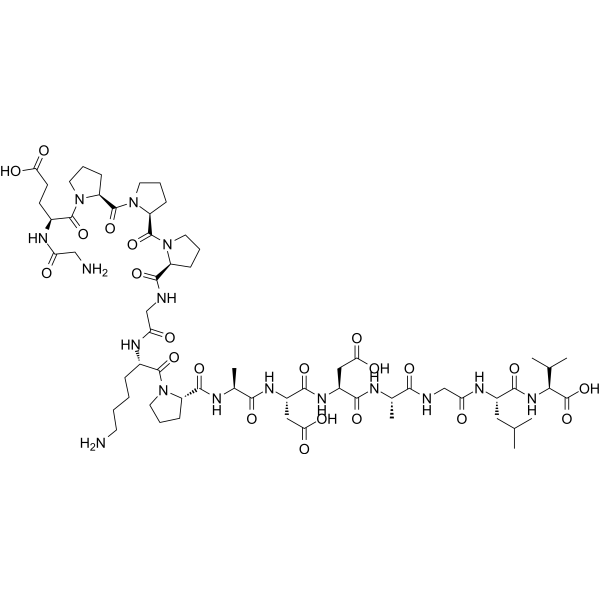
Molecular Mass: 1815.1 Da
Research to learn more about coeliac disease and find out the exact causes of it is ongoing
This high-dose protocol is specifically designed for individuals facing severe tissue damage, complex injuries, or conditions requiring maximum regenerative support